Canada's retaliatory tariffs, launched September 8 at rates of 15%, 25%, and 50% on U.S. goods including steel and aluminum, translate to household budget pressure in ways most clients won't see itemized on a receipt. The $27.6 billion in targeted countermeasures announced by Finance Canada does not land evenly across spending categories. It clusters.
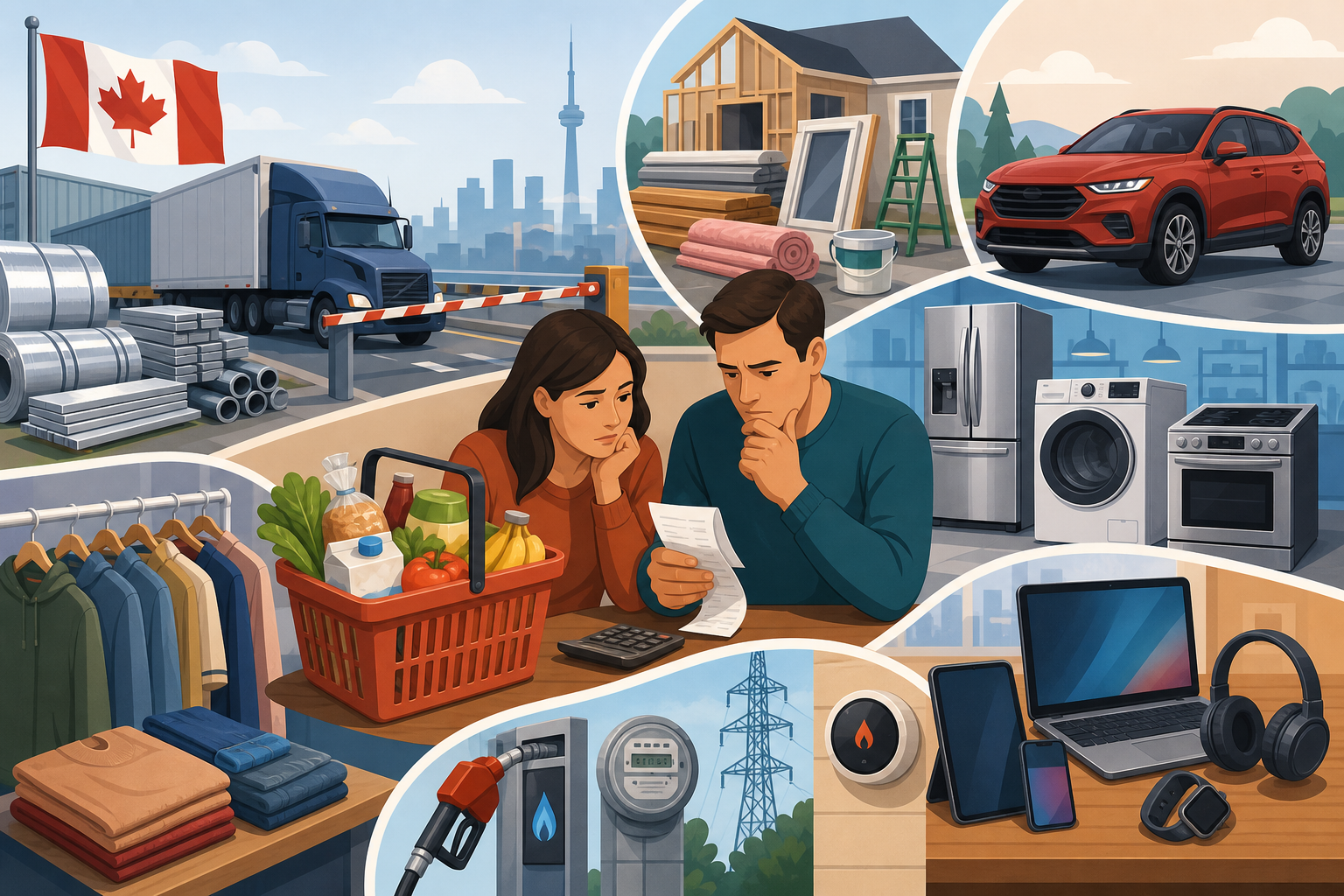
The seven budget lines advisors should be tracking right now: groceries, home renovation materials, vehicles, household appliances, clothing, electronics, and energy-related costs. These are the categories where U.S. supply chains run deep enough that a border surtax moves from importer to distributor to shelf price within 60 to 90 days. The delay matters. Clients shopping today are burning through pre-tariff inventory. The price adjustments show up in Q4 2026 and into early 2027.
Where the increases show first
Groceries hit hardest for volume buyers. Prepared foods, coffee, condiments, and certain fresh produce categories rely on cross-border logistics that were already thin-margin operations before the August 22 imposition of U.S. tariffs on Canadian goods. Canadian retailers ordering replacement stock now face the surtax. A $200 weekly grocery bill for a family of four could rise by $8 to $15 depending on brand loyalty and substitution flexibility.
Home renovation costs were climbing before tariffs entered the picture. Now they're compounding. Steel, aluminum, and lumber products sourced from politically sensitive U.S. regions were targeted deliberately. A kitchen remodel budgeted at $30,000 in July may require a 12% to 18% revision by December if the contractor is ordering materials post-September. Advisors working with clients who deferred maintenance projects should flag this now, not after the quotes come back higher.
Vehicles and appliances represent the long-tail exposure. A washing machine has a 10- to 15-year replacement cycle. Tariffs don't change the cycle, but they do change the replacement cost when the cycle ends. For clients shopping new or used vehicles with significant U.S.-manufactured content, the sticker shock is already present. Canadian dealers are adjusting allocations and raising prices on 2027 models to cover expected tariff costs on imported components.
Why small businesses absorb less than households
Large retailers can force suppliers to eat part of the tariff cost or trim their own margins to hold market share. Small and medium Canadian enterprises cannot. A family-run hardware store in Guelph or a boutique grocer in Kelowna operates on margins too slim to absorb a 10% cost increase on half their inventory. They pass it through or they close. This creates a two-tier price environment where clients shopping at independents see steeper increases than clients shopping at Loblaws or Walmart Canada.
The USMCA was supposed to prevent this. It does, for most goods, most of the time. Section 232 national security provisions are the mechanism the U.S. uses to bypass free-trade norms. Canada's response is structured as dollar-for-dollar reciprocity, targeting goods from congressional swing districts. The retaliation is surgical, but the household impact is diffuse.
What advisors should be telling clients now
Use portfolio rebalancing to harvest gains that offset rising cost of living. A client sitting on equity gains in a taxable account might view taking some profit differently when their household budget is under 3% to 5% inflation pressure from trade penalties that won't show up labelled as "tariff" on any receipt.
The Bank of Canada's 2% inflation target is already under strain. Trade wars represent what the central bank calls "upside risk." A loonie trading near $0.72 USD compounds the problem. Imported goods hit with tariffs are also hit with unfavorable exchange rates. The double effect is harder to hedge at the household level than at the institutional level.
Financial advisors are now macro-interpreters. Clients want to know why their purchasing power is shrinking when domestic interest rates are stable. The answer isn't interest rates. It's the invisible consumption tax baked into the shelf price of anything crossing the border. That tax has a name, a rate, and a September 8 start date. Track it by category. Quantify it in client reviews. Build it into 2027 cash flow models as a permanent line item until the dispute resolves.




Canada's retaliatory tariffs, launched September 8 at rates of 15%, 25%, and 50% on U.S. goods including steel and aluminum, translate to household budget pressure in ways most clients won't see itemized on a receipt. The $27.6 billion in targeted countermeasures announced by Finance Canada does not land evenly across spending categories. It clusters.
The seven budget lines advisors should be tracking right now: groceries, home renovation materials, vehicles, household appliances, clothing, electronics, and energy-related costs. These are the categories where U.S. supply chains run deep enough that a border surtax moves from importer to distributor to shelf price within 60 to 90 days. The delay matters. Clients shopping today are burning through pre-tariff inventory. The price adjustments show up in Q4 2026 and into early 2027.
Where the increases show first
Groceries hit hardest for volume buyers. Prepared foods, coffee, condiments, and certain fresh produce categories rely on cross-border logistics that were already thin-margin operations before the August 22 imposition of U.S. tariffs on Canadian goods. Canadian retailers ordering replacement stock now face the surtax. A $200 weekly grocery bill for a family of four could rise by $8 to $15 depending on brand loyalty and substitution flexibility.
Home renovation costs were climbing before tariffs entered the picture. Now they're compounding. Steel, aluminum, and lumber products sourced from politically sensitive U.S. regions were targeted deliberately. A kitchen remodel budgeted at $30,000 in July may require a 12% to 18% revision by December if the contractor is ordering materials post-September. Advisors working with clients who deferred maintenance projects should flag this now, not after the quotes come back higher.
Vehicles and appliances represent the long-tail exposure. A washing machine has a 10- to 15-year replacement cycle. Tariffs don't change the cycle, but they do change the replacement cost when the cycle ends. For clients shopping new or used vehicles with significant U.S.-manufactured content, the sticker shock is already present. Canadian dealers are adjusting allocations and raising prices on 2027 models to cover expected tariff costs on imported components.
Why small businesses absorb less than households
Large retailers can force suppliers to eat part of the tariff cost or trim their own margins to hold market share. Small and medium Canadian enterprises cannot. A family-run hardware store in Guelph or a boutique grocer in Kelowna operates on margins too slim to absorb a 10% cost increase on half their inventory. They pass it through or they close. This creates a two-tier price environment where clients shopping at independents see steeper increases than clients shopping at Loblaws or Walmart Canada.
The USMCA was supposed to prevent this. It does, for most goods, most of the time. Section 232 national security provisions are the mechanism the U.S. uses to bypass free-trade norms. Canada's response is structured as dollar-for-dollar reciprocity, targeting goods from congressional swing districts. The retaliation is surgical, but the household impact is diffuse.
What advisors should be telling clients now
Use portfolio rebalancing to harvest gains that offset rising cost of living. A client sitting on equity gains in a taxable account might view taking some profit differently when their household budget is under 3% to 5% inflation pressure from trade penalties that won't show up labelled as "tariff" on any receipt.
The Bank of Canada's 2% inflation target is already under strain. Trade wars represent what the central bank calls "upside risk." A loonie trading near $0.72 USD compounds the problem. Imported goods hit with tariffs are also hit with unfavorable exchange rates. The double effect is harder to hedge at the household level than at the institutional level.
Financial advisors are now macro-interpreters. Clients want to know why their purchasing power is shrinking when domestic interest rates are stable. The answer isn't interest rates. It's the invisible consumption tax baked into the shelf price of anything crossing the border. That tax has a name, a rate, and a September 8 start date. Track it by category. Quantify it in client reviews. Build it into 2027 cash flow models as a permanent line item until the dispute resolves.
Sources
Read Next
Bond Yields Just Jumped. Here's How That Raises Your Mortgage Rate in Canada
Most Refinancers Reset Their Amortization to 25 Years Without Realizing It's Optional
How to Automate Freed Cash Flow Into 4 Wealth-Building Accounts Before It Disappears
The Cash Flow You Free Up After Restructuring: A Seven-Step Roadmap to Retirement Security